Subtropical sunlight, low humidity periods, and steady canal breezes cause swimming pools in Cape Coral to lose between one-quarter and one-half inch of water daily to evaporation. However, when water levels drop more than two inches over 48 hours, pool owners face an active plumbing breach or structural vessel fracture that demands immediate diagnostic isolation.
The Calibrated Bucket Test Protocol
Before commissioning specialized equipment, technicians perform a standardized 24-hour evaporation benchmark known as the bucket test. This test eliminates environmental variables by measuring water loss in an isolated vessel exposed to the identical ambient conditions as the pool.
A 5-gallon bucket filled with pool water is placed on the first pool step, ensuring water inside matches the temperature of the surrounding pool basin. The technician marks water levels both inside the bucket and outside on the pool wall using waterproof tape. After 24 hours of normal filtration runtime, both levels are measured with a digital caliper. If the pool water drops significantly further than the bucket interior, a physical leak is confirmed.
Common Leak Epicenters on Southwest Florida Decks
Inground concrete pools in Lee County experience distinctive stress fractures due to shifting sandy subsoils and settling paver decks. The most common physical breach points include:
- Skimmer Throat Separation: Concrete pool shells and PVC skimmer boxes possess different thermal expansion coefficients. Shifting ground creates hairline fractures between the plastic skimmer faceplate and the gunite wall, pulling hundreds of gallons into the soil daily.
- Return Line Plumbing Breaches: Underground Schedule 40 PVC returns running beneath travertine or concrete pavers can crack under vibration or tree root encroachment. Breaches on the pressure side leak continuously when the pump operates.
- Light Niche Conduit Penetrations: Pool light cords run through underwater conduit lines back to junction boxes. If the internal silicone seal degrades, hydrostatic water pressure forces water into the underground electrical conduit.
Electronic Acoustic and Nitrogen Pressure Isolation
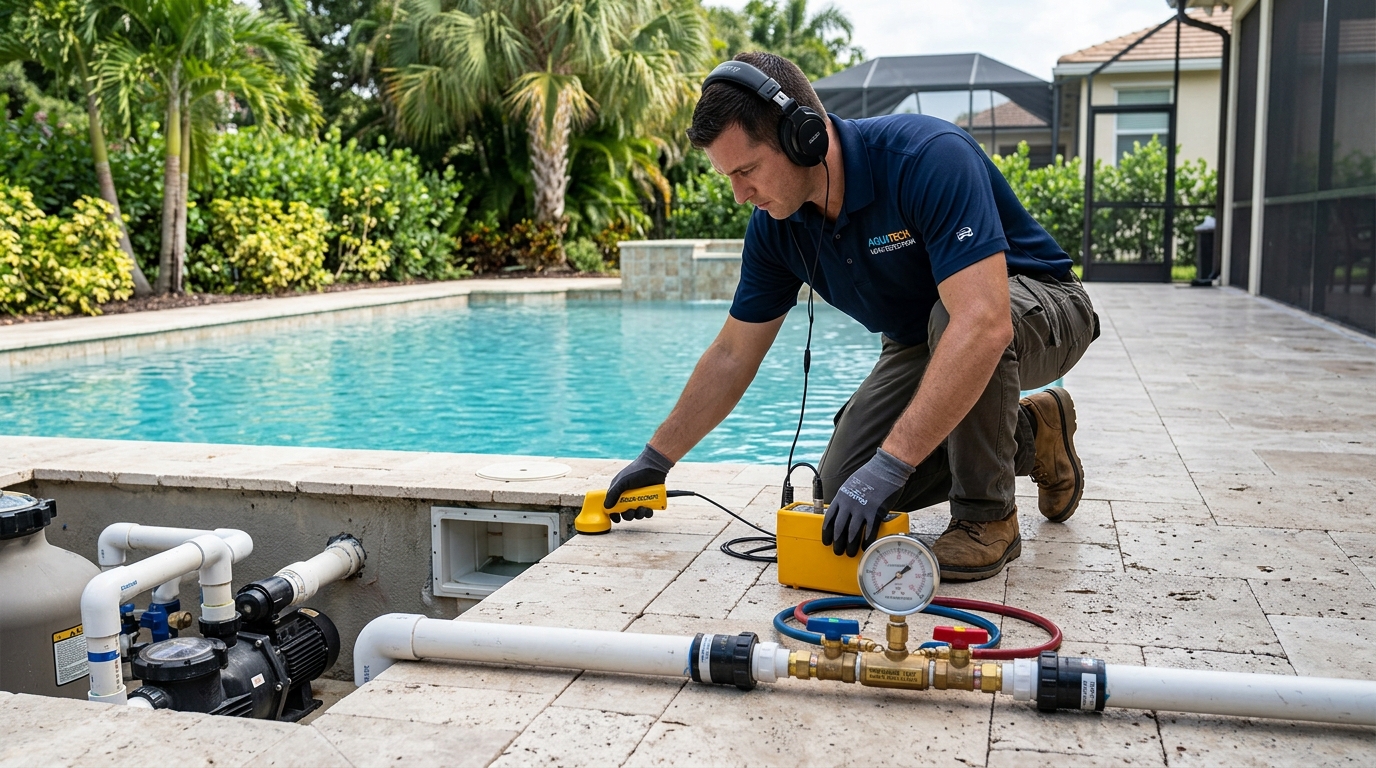
Pinpointing underground leaks without digging up luxury travertine decking requires advanced non-invasive technology through professional pool leak detection services supported by reliable weekly pool service route reporting.
Specialized acoustic listening discs detect the high-frequency sound of water escaping under pressure into the surrounding ground. Technicians plug individual skimmers, main drains, and return lines, charging isolated pipe segments with low-pressure nitrogen gas. A pressure gauge drop pinpoints the exact faulty pipe run within minutes, allowing surgical repair rather than extensive patio destruction.
Swift leak identification protects foundation footings, preserves expensive water and chemicals, and keeps Cape Coral pools structurally sound for decades of enjoyment.