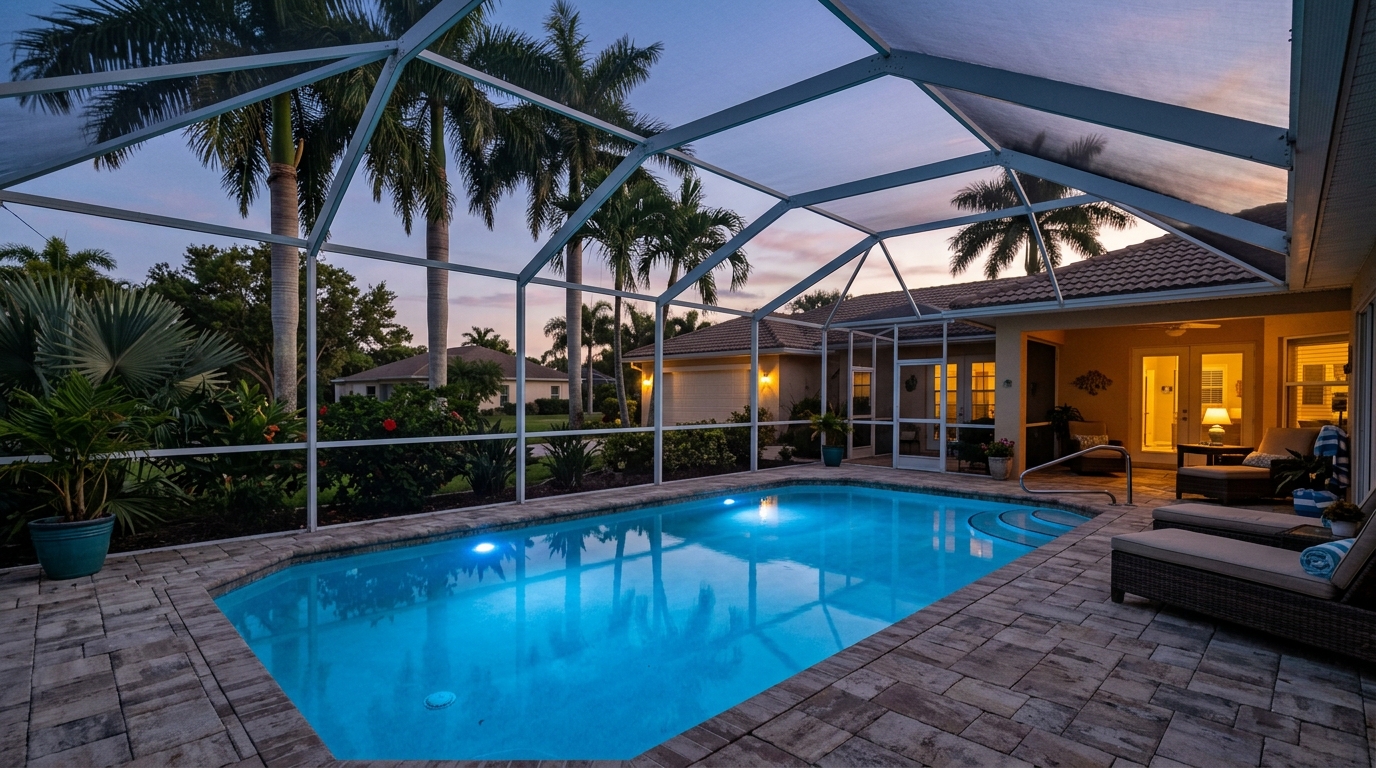
Every May, thousands of seasonal residents depart Cape Coral for northern homes, with many asking their property managers to shut down pool pumps to reduce electric bills. In Southwest Florida’s subtropical climate, turning off circulation for even ten days during summer heat creates an unmitigated biological disaster that causes thousands of dollars in plaster damage.
The Biology of Stagnant Water in Florida Summer Heat
In northern climates, winterizing involves lowering water levels, blowing out plumbing lines, and installing heavy safety covers against freezing temperatures. Applying that mindset to a Cape Coral swimming pool in June produces catastrophic results. With surface water temperatures exceeding 88°F and intense ultraviolet radiation degrading sanitizers, stagnant pool water transforms into a toxic black algae swamp within a week.
Algae blooms do not merely discolor water; aggressive cyanobacteria root deeply into the porous matrix of marcite plaster and pebble finishes. Once black algae establishes anchoring roots within the gunite shell, eradication requires extensive draining, manual wire scrubbing, and destructive acid washing that strips years off the plaster lifespan.
Optimizing Absentee Filtration and Energy Efficiency
Maintaining an unattended pool does not require exorbitant electric bills. Modern variable-speed pumps allow route technicians to program low-RPM filtration schedules that satisfy Florida sanitary turnover requirements while drawing less than 200 watts of power.
Running a variable-speed pump continuously at 1,600 to 1,800 RPM circulates the complete pool volume twice daily while keeping monthly electric costs with Lee County Electric Cooperative (LCEC) under $25. Continuous gentle circulation prevents surface stagnation, disperses sanitizers evenly, and pulls windblown canal midges into skimmers before they sink.
Summer Chemical Buffering and Water Level Security
Absentee pool management requires resilient chemical buffering. Because heavy summer thunderstorms dilute alkalinity and lower water pH, route coordinators balance total alkalinity between 90 and 110 ppm using sodium bicarbonate to resist acid shock from tropical rain. Coordinating regular visits through our weekly pool service and specialized pool chemical balancing keeps water chemistry perfectly stable.
Equally critical is water level management. Intense summer evaporation can drop water beneath the skimmer mouth, causing pumps to suck air, lose prime, and melt plumbing unions. Installing calibrated auto-fill float valves ensures water levels remain safe without risk of overfilling.
Continuous professional route oversight ensures seasonal homeowners return in October to pristine, sparkling turquoise water ready for immediate enjoyment.